
 2301 S Broadway Ave A6 Tyler, TX 75701


How to Test If Your Gold Is Real at Home Before Selling in Tyler, TX
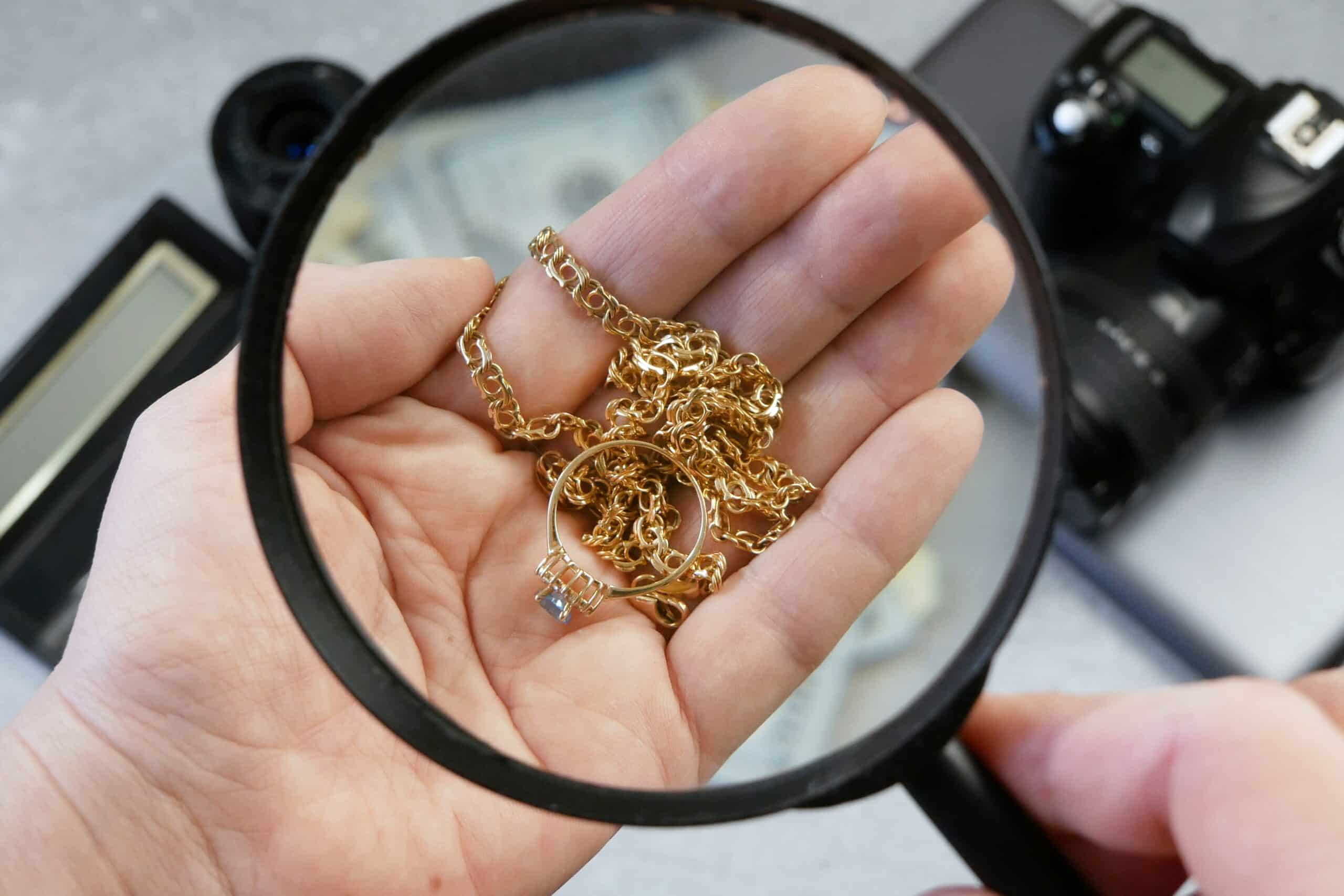
Testing gold at home can rule out obvious fakes before you visit a buyer in Tyler, but home tests have real limits that most sellers do not know about. This guide covers five checks you can run yourself, what each one actually tells you, what none of them can definitively confirm, and when professional XRF testing at a licensed precious metal buyer is the smarter next step.
At Tyler Gold & Bullion, we are licensed by the Texas Office of Consumer Credit Commissioner (OCCC) as a certified precious metal buyer. Our scales are certified by the Texas Department of Agriculture, and our GIA-certified appraisers use Thermo-Fisher XRF technology to test every item non-destructively in front of you. Tyler residents rate us 4.9 stars on Google. Whether your item passes every home test or none of them, a professional evaluation at our Tyler location is always free and always explains what you have before any decision is made.
Why Knowing If Your Gold Is Real Matters Before You Sell
Uncertainty about whether a gold item is genuine is one of the most common reasons Tyler residents delay selling for months or years. Some items have no visible karat stamps. Others carry stamps that may have been applied to non-gold pieces at manufacture. Many people inherited jewelry with no documentation and have never had the items professionally tested.
Walking into any gold buyer in Tyler without understanding what you have puts you at a disadvantage. Running basic home checks first helps you walk in with confidence, ask the right questions, and recognize when a buyer is evaluating your items correctly. It also protects you from accidentally selling a high-karat piece while assuming it has little value because it looks plain or worn.
Learn more about what to bring and how the full process works on our what we do page, which explains each step of the professional evaluation.
Why So Many Sellers Are Unsure About Their Gold
Gold-plated and gold-filled jewelry has been commercially produced for over a century and looks nearly identical to solid gold in most lighting conditions. The gold industry does not always make this easy for everyday sellers to navigate. Here are the most common reasons people are uncertain about what they own.
- Inherited items often come with no receipts, no certificates, and no one left to ask about their origin.
- Gold-plated brass and gold-filled pieces look identical to solid gold without testing.
- Karat stamps can be worn to the point of illegibility on older jewelry.
- Some international gold jewelry uses numbering systems (585, 750) that are unfamiliar to U.S. sellers.
- Items purchased at estate sales, flea markets, or antique dealers may have been mislabeled at some point in their history.
Warning Signs Your Gold Item Might Not Be Solid Gold
Before running any tests, look for these signs that an item may not be solid gold. None are definitive on their own, but multiple warning signs together suggest professional testing is worth prioritizing.
- The item is unusually light compared to other gold pieces of similar size and style.
- There is greenish or blackish discoloration at edges, clasps, or areas of frequent contact with skin.
- No visible karat stamp can be found even under magnification.
- The metal has an unusually uniform, shiny appearance that looks more like a coating than solid metal.
- The piece came from an unknown source with no documentation, receipt, or purchase history.
5 Home Tests for Gold: What Each One Actually Tells You
Test 1: The Magnet Test
Gold is not magnetic. Hold a strong neodymium magnet near your item. If it pulls strongly toward the magnet, the item contains magnetic metals, such as iron or steel in its core, and is not solid gold.
What it tells you: A strong magnetic pull rules out solid gold. What it does not tell you: Many non-gold metals are also non-magnetic, including copper, brass, and most alloys used in jewelry. A non-magnetic result means the item could be gold, or it could be one of several non-magnetic counterfeits. A failed magnet test is informative. A passed magnet test is only one piece of the picture.
Test 2: The Ceramic Streak Test
Rub the item firmly across a piece of unglazed ceramic, such as the unglazed bottom surface of a ceramic tile. Real gold consistently leaves a yellow-gold streak. Most fake gold metals leave a black or dark gray streak.
What it tells you: This test is more informative than the magnet test for ruling out heavily plated or base metal items. What it does not tell you: It cannot confirm karat purity, and thick gold plating can also produce a yellow streak. The test can also leave small surface marks on soft items.
Test 3: The Float Test
Drop the item into a glass of water. Real gold is dense and sinks quickly. Many fake gold items made from lighter metals float or sink more slowly than expected for their size.
What it tells you: An item that floats or barely sinks likely contains lighter metals and is probably not solid gold. What it does not tell you: Many non-gold metals are also dense and sink. Hollow gold pieces or chains with trapped air may sink more slowly despite being real gold. This test is most useful as a quick initial check, not a final answer.
Test 4: The Skin Discoloration Test
Hold the item in a clean palm for several minutes. Real gold at 18K and above typically leaves no mark on skin. Fake gold and heavily alloyed low-karat pieces can leave green or black discoloration from reactions between skin chemistry and base metals in the alloy.
What it tells you: Green or black skin marks are a reasonable indicator that non-gold metals are present in significant quantities. What it does not tell you: Some genuine 10K gold, which contains a higher percentage of copper alloy, can leave faint marks on certain skin types. This test is a useful supplemental indicator alongside others.
Test 5: The Hallmark and Karat Stamp Check
Inspect the item under good light with a magnifying glass for karat stamps: 10K, 14K, 18K, or 24K. Also look for metric equivalents: 417 (10K), 585 (14K), 750 (18K), or 999 (24K). Manufacturer marks, assay office marks, and country stamps may also be present.
What it tells you: A readable karat stamp tells you what the manufacturer claimed about the item at the time of production. What it does not tell you: Karat stamps can be applied to gold-plated pieces. Some international items use unfamiliar marking systems. Worn stamps may be unreadable. The stamp states the manufacturer’s claim, not a confirmed test result.
What Home Gold Tests Cannot Tell You
Even if your item passes all five home tests, there are things no home test can confirm. Understanding these limits protects you from making decisions based on incomplete information. Home tests cannot tell you:
- The actual gold purity percentage (whether a 14K stamp is accurate at the core)
- Whether a real gold surface coating covers a non-gold core, such as in gold-plated or gold-filled pieces
- The accurate weight of gold content within a piece that contains non-gold components
- The current market value of your item based on its actual composition
- Whether a coin contains real gold versus a convincing tungsten or lead counterfeit
For items with genuine value, professional XRF testing closes all of these gaps. Our blog on the benefits of selling gold jewelry to licensed buyers in Tyler, TX explains how professional testing protects sellers specifically.
Common Gold Look-Alikes That Tyler Residents Bring In
Professional gold buyers in Tyler see a wide range of non-gold items that pass casual inspection. Knowing these categories helps you understand what professional testing is actually looking for.
- Gold-plated brass: visually identical to gold, non-magnetic, sometimes passes the ceramic streak test if plating is thick enough. Contains almost no recoverable gold.
- Gold-filled items: legally required to contain at least 5% gold by weight. Have a substantial gold layer but are not solid gold throughout. Have limited resale value compared to solid gold.
- Vermeil (sterling silver with gold plating): stamped 925 on the base. Yellow in appearance but the base material is silver, not gold.
- Rolled gold: multiple layers of gold mechanically applied to a base metal. More durable than plating but still not solid gold.
- Brass alloys in gold tones: very common in fashion and estate jewelry. Non-magnetic and yellow in color, but no gold content.
Our gold jewelry page explains how different types of gold items are evaluated, and our blog on broken or damaged gold jewelry covers how condition and type affect what sellers receive.
When Home Tests Are Not Enough: Professional XRF Testing in Tyler
If your item passes two or more home tests but you are still uncertain, or if the item has sentimental or potentially high financial value, professional XRF testing is the appropriate next step. Thermo-Fisher XRF analyzers use X-ray fluorescence technology to read precise metal composition without touching, scratching, or damaging the piece.
XRF testing takes seconds and produces a precise percentage breakdown of every metal in the item: gold, silver, copper, zinc, and others. It is the only non-destructive method that can confirm whether a karat stamp is accurate, detect gold plating over a non-gold core, and identify gold-filled construction in older pieces. It is also essential for gold coins, where high-quality counterfeits with tungsten cores cannot be identified by home tests alone.
Our GIA-certified appraisers apply XRF testing to every item as part of the free evaluation process at our Tyler location. Before you prepare your gold for sale, understanding what you have through professional testing gives you the clearest picture available. You can also explore our gold exchange page to see how the full process works from start to finish.
Gold Testing in the Tyler, TX Context
Tyler and the greater East Texas region have a strong tradition of passing gold jewelry, coins, and bullion through generations. Estate sales in Smith County frequently include gold items that have changed hands multiple times without professional authentication at any point along the way. Many sellers arrive at our Tyler location with inherited pieces that have not been tested since they were originally manufactured.
This makes professional testing particularly valuable in the Tyler market. Local estate sales and antique dealers sometimes move items that have been identified by visual inspection rather than testing. A free evaluation at Tyler Gold & Bullion gives sellers accurate information regardless of where the item originated or how many people have owned it since.
Visit our guide to selling gold locally in Tyler for a full picture of how local selling protects sellers compared to mail-in or online options.
Why Tyler Residents Choose Tyler Gold & Bullion for Gold Testing and Appraisals
| What We Offer | What It Means for You |
|---|---|
| Licensed by the Texas OCCC | You are working with a state-certified, regulated precious metal buyer |
| Texas Dept. of Agriculture certified scales | Every weight reading meets state accuracy standards |
| GIA-certified appraisers | Professional expertise applied to every item you bring in |
| Thermo-Fisher XRF technology | Non-destructive metal composition testing confirms exactly what you have |
| Full transparency on the counter | You see every test and every calculation as it happens in front of you |
| Free appraisals with no obligation | You leave with accurate information whether you sell or not |
| No pressure process | You decide at your own pace. We provide answers, not pressure. |
| Rated 4.9 stars on Google | 4.9-star rating recognized by Tyler residents for honest, professional service |
FAQs About Testing Gold at Home in Tyler, TX
Can a fake gold item pass the magnet test?
Yes. Many metals used in fake gold jewelry are non-magnetic. Copper, brass, and aluminum all produce no magnetic response. A non-magnetic result means the item could be gold or a non-magnetic counterfeit. The magnet test only reliably rules out items that show a strong magnetic pull toward the magnet.
What does a black streak on ceramic mean when I test my gold?
A black or dark streak on unglazed ceramic indicates the item is not solid gold or has only a thin gold coating over a darker base metal. Real solid gold consistently leaves a yellow-gold streak. The ceramic test is a useful tool for ruling out many obvious fakes but cannot confirm karat purity or detect gold plating thick enough to produce a yellow streak.
Why does some jewelry leave green or black marks on my skin?
Skin discoloration comes from metal alloys in the jewelry reacting with skin moisture, oils, and chemistry. Black marks typically indicate silver or silver-containing alloys. Green marks usually indicate copper content. High-karat gold at 18K and above rarely causes marks. Lower-karat 10K gold contains enough copper alloy to occasionally leave faint marks on some skin types.
Is it safe to assume karat stamps on gold jewelry are accurate?
Not always. U.S. law requires accurate karat stamping, but not all jewelry sold in the U.S. is domestically manufactured. Some imported pieces carry stamps that do not accurately reflect the actual gold content at the core. Professional XRF testing is the only reliable way to confirm that a karat stamp matches the actual metal composition throughout the item.
What is the difference between gold-plated and gold-filled jewelry?
Gold-plated jewelry has a very thin layer of gold applied via electroplating. The gold layer is measured in microns and wears away with regular use. Gold-filled jewelry has a substantially thicker gold layer mechanically bonded to the base metal and is legally required to contain at least 5% gold by weight. Neither is solid gold, and both have very different value profiles than solid gold items.
Can I use the ceramic streak test on antique or heirloom jewelry?
The ceramic streak test requires rubbing the item firmly against unglazed ceramic, which can leave small surface marks on softer metals. For high-value antiques or heirlooms where you are concerned about surface condition, skip the home tests and bring the item directly for a free professional evaluation using non-destructive XRF testing. No home test is worth risking damage to a potentially valuable piece.
What do stamps like 585, 750, or 417 mean on gold jewelry?
These are metric equivalents for U.S. karat stamps used on internationally produced gold. 585 means 58.5% gold purity, equivalent to 14K. 750 means 75% gold purity, equivalent to 18K. 417 means 41.7% gold purity, equivalent to 10K. European and Asian jewelry commonly uses these numeric marks instead of karat designations. Both are valid indicators of gold purity.
Why might a real gold item have no karat stamp at all?
Some older jewelry predates modern stamping requirements. Items made before the early 20th century may carry no stamps. Some handmade or artisan pieces were never marked. Antique gold from certain international origins uses hallmarking systems that are not immediately recognizable. No stamp does not mean not gold. A free professional evaluation can test unstamped items accurately with XRF technology.
Is the float test reliable for gold chains and hollow jewelry?
The float test is less reliable for chains and hollow jewelry because air pockets inside hollow links affect buoyancy. A solid gold chain sinks quickly, but a thick hollow gold chain may sink more slowly due to trapped air. For chains, combine the float test with the hallmark check and magnet test to build a more complete picture before bringing the item to a professional.
How does XRF testing differ from the acid test for gold?
Acid testing applies nitric acid solutions to a small mark rubbed from the item and estimates karat range based on how the acid reacts. It requires physical contact with the metal and produces a narrow result. XRF testing is completely non-destructive. It uses X-ray fluorescence to analyze metal composition in seconds without touching the piece, producing precise percentage breakdowns of every metal present. XRF is significantly more accurate and does not risk surface damage.
Can gold-filled or gold-plated items be sold to Tyler Gold & Bullion?
Gold-filled items contain a meaningful gold layer and can sometimes be purchased, though at a different rate than solid gold. Gold-plated items contain very little recoverable gold and are generally not purchased for their gold content. Our GIA-certified appraisers will test and clearly identify what you have during a free evaluation so you know exactly what you own before making any decision.
What should I bring if I am unsure whether my items are real gold?
Bring the items as they are. No preparation or cleaning is necessary. A valid government-issued ID is required for any transaction in Texas but not for a free appraisal only. If you have any certificates, receipts, or documentation related to the items, bring those as well. Our team will test each item using XRF technology and explain every result during your visit at our Tyler location.
Do home gold tests work on gold coins?
The magnet test and float test provide basic information for gold coins. However, sophisticated counterfeit gold coins with tungsten cores closely mimic gold’s density and magnetic properties, making home tests unreliable for coins specifically. Professional XRF testing is especially important for gold coins because the counterfeits are more convincing than typical jewelry fakes and the value at stake is often higher.
What does a 925 stamp on yellow-colored jewelry mean?
A 925 stamp indicates sterling silver, which is 92.5% pure silver. If a piece stamped 925 has a yellow appearance, it is most likely sterling silver with gold-colored plating, known as vermeil. The base material is silver, not gold. This significantly affects the value, as the piece would be evaluated for its silver content rather than gold content during a professional appraisal.
Is it worth getting a free appraisal even if my home tests suggest the item is not real gold?
Yes. Home tests are not definitive. Some items that appear to fail home tests are genuine gold with characteristics that produce unexpected test results. More importantly, items that are not solid gold may still contain silver, silver alloys, or other metals with real market value. A free professional appraisal at Tyler Gold & Bullion costs you nothing and gives you accurate information regardless of what home tests suggested.
Ready to Know for Certain? Get a Free Gold Test at Tyler Gold & Bullion
Home tests are a useful starting point, but they can only take you so far. If you want accurate, definitive answers about what your gold items contain and what they are worth in the current Tyler market, professional XRF testing is the only complete solution.
Bring your items to Tyler Gold & Bullion at 2301 S Broadway Ave A6 in Tyler, TX. Our OCCC-licensed, GIA-certified team will test every piece non-destructively in front of you and explain the results in plain language. You pay nothing for the evaluation and have no obligation to sell. See all the types of gold items we evaluate and purchase before your visit. Call 903-522-4149 to ask questions before coming in, or stop by Monday through Friday from 10am to 4pm. Real answers cost you nothing at Tyler Gold & Bullion.