 2301 S Broadway Ave A6 Tyler, TX 75701




Why Selling Your Gold Jewelry to a Licensed Buyer in Tyler, TX Protects You and Your Payout
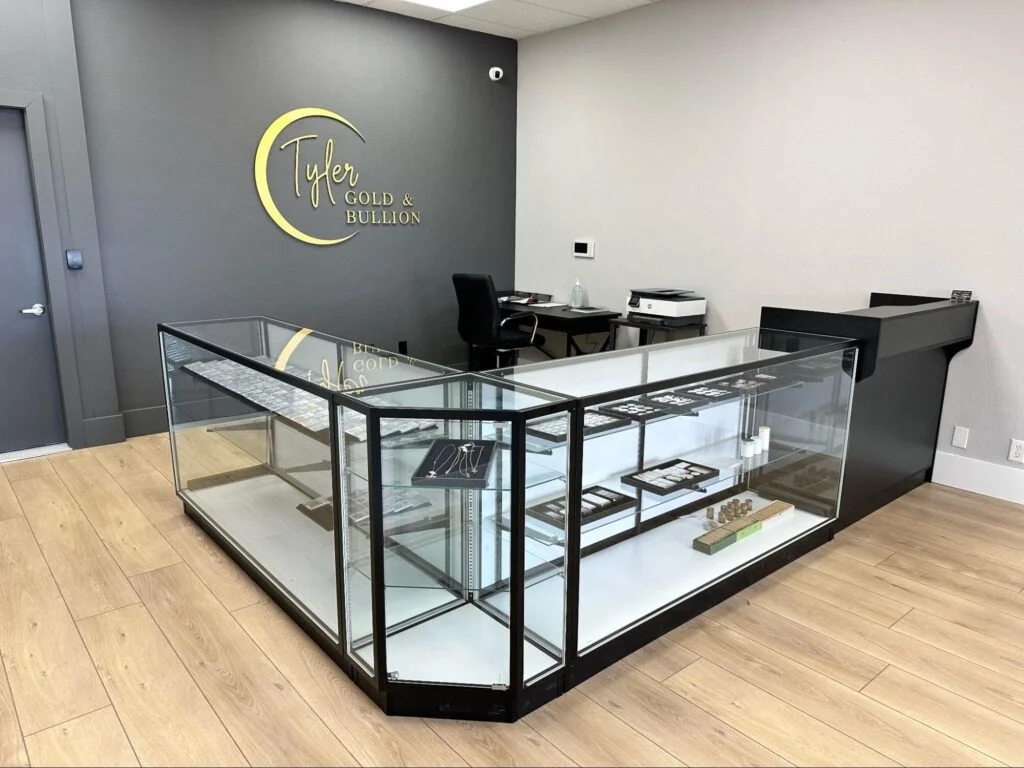
Not every buyer who claims to buy gold in Tyler operates under the same rules. Some are licensed and regulated by Texas state authorities. Others are not. The difference matters because it determines what protections you have as a seller, whether the evaluation tools used meet state standards, and how much accountability exists if something goes wrong. This guide explains what licensed status actually means, what risks unlicensed buyers present, and why selling gold jewelry to a properly licensed buyer in Tyler produces safer, more transparent results.
At Tyler Gold & Bullion, we are licensed by the Texas Office of Consumer Credit Commissioner (OCCC) as a certified precious metal buyer. Our scales are certified by the Texas Department of Agriculture for accuracy, and our experienced buyers use Thermo-Fisher XRF technology to test every item without damaging it. Tyler residents rate us 4.9 stars on Google and recognize us on Yelp. Every evaluation at our Tyler location is free, transparent, and explained step by step before any decision is made.
The Real Problem: Not All Gold Buyers in Tyler Operate the Same Way
Tyler has many places advertising to buy gold. The difference between a licensed, state-regulated buyer and an unlicensed operator is not always visible at a glance. Both may have storefronts, websites, and online reviews. The difference shows up in what happens during and after the transaction, and in what recourse you have if the process was not handled correctly.
For Tyler residents selling gold jewelry, that distinction is worth understanding before you walk in anywhere. Our blog on the advantages of selling gold jewelry to local buyers instead of pawn shops covers some of these differences, but the licensed-vs-unlicensed distinction goes deeper than pawn vs. specialist.
What Makes a Gold Buyer Licensed in Texas?
In Texas, businesses that purchase precious metals must be licensed by the Texas Office of Consumer Credit Commissioner. This licensing is not optional. It requires the buyer to meet specific legal standards and submit to state oversight. Licensed buyers in Texas are required to:
- Register with the OCCC and maintain active licensure in good standing with the state.
- Verify the identity of every seller using a valid government-issued photo ID and record that information for each transaction.
- Maintain transaction records that are available to law enforcement when required. This protects both sellers and the integrity of the market.
- Use weighing equipment that meets state accuracy standards. In Texas, business scales used for commercial transactions must be inspected and certified by the Texas Department of Agriculture.
- Provide sellers with documentation of the transaction, including a receipt that serves as official proof of sale.
These requirements exist specifically to protect sellers. They mean that your transaction is traceable, your identity is verified, your items are weighed on certified equipment, and there is a state-maintained record if any question arises after the fact.
The Risks of Selling to Unlicensed Gold Buyers
No State Oversight or Accountability
An unlicensed buyer has no obligation to maintain transaction records, use certified scales, or follow the state consumer protection standards designed to safeguard sellers. If a dispute arises, you have no state-mandated documentation to reference and no licensing board to report to. The transaction exists only as an informal exchange with no accountability mechanism.
No Certified Equipment Requirements
Without the legal requirement to use Texas Department of Agriculture certified scales, an unlicensed buyer can use equipment that has not been inspected for accuracy. Even a small error in scale calibration can meaningfully affect the weight calculation that determines your offer. A 1% error on a $1,000 transaction is $10. A 5% error compounds significantly over larger collections or higher karat items.
Limited Testing Standards
Licensed professional buyers invest in testing equipment that meets industry standards, including XRF analyzers that confirm metal composition accurately and non-destructively. Unlicensed or informal buyers may rely on basic acid tests, visual inspection, or outdated methods that are less accurate and, in some cases, damaging to the item being tested.
How Licensed Buyer Status Affects Your Actual Payout
Licensed buyers have reputational and legal stakes that informal buyers do not. They rely on repeat customers, community references, and the ability to maintain their license to continue operating. These incentives push licensed buyers toward accurate evaluations and fair offers. An unlicensed buyer who underpays faces no license at risk and no formal accountability.
For sellers, this means a licensed buyer has structural motivation to evaluate your gold accurately and offer a competitive price. Our blog on gold price today vs your actual payout explains how the calculation works and what a fair payout percentage looks like. Understanding both the calculation and who is applying it gives you the clearest protection.
What Professional Testing Equipment Actually Does for Sellers
The Thermo-Fisher XRF analyzer used at Tyler Gold & Bullion is one of the most accurate non-destructive metal testing technologies available in the precious metals industry. It reads the actual metal composition of your item without cutting, scraping, or damaging it. The result is a precise percentage breakdown of gold, silver, copper, zinc, and any other metals present.
This technology protects sellers in two specific ways. It confirms that the karat stamp on your jewelry is accurate, because stamps can sometimes be applied to plated or lower-karat pieces. It also ensures that items without stamps get an accurate reading rather than a visual estimate. You can read more about how this works on our what we do page. Our full about Tyler Gold & Bullion page also outlines our credentials and the tools we use.
What the Selling Process Looks Like With a Licensed Buyer in Tyler
A properly licensed gold buyer follows a consistent, transparent process for every transaction. Here is what you experience when you visit Tyler Gold & Bullion.
- You arrive with your gold jewelry and a valid government-issued photo ID. The ID is required under Texas law for all precious metal transactions.
- Your items are placed on the counter for evaluation. There are no back rooms. Everything is tested and weighed in front of you.
- Our experienced buyers use XRF technology to confirm metal composition and certified scales to measure weight. You see the equipment, the readings, and the calculations.
- The buyer explains how each item was evaluated and how the offer was calculated. You understand exactly what you are being paid for before you make any decision.
- If you accept the offer, a receipt is provided and payment is made immediately by cash, check, or bank transfer.
- You leave with payment in hand and official documentation of the transaction.
For sellers who have never visited a professional gold buyer before, our complete guide to selling gold locally in Tyler provides a full walkthrough of what to expect from arrival to payment.
Why Licensed Buyers Matter Specifically for Tyler, TX Sellers
Tyler’s gold and precious metals market is active, with estate sales, jewelry buyers, pawn shops, and specialized buyers all advertising to sellers in Smith County and the surrounding East Texas area. In this environment, licensed status is one of the clearest signals a buyer can offer that they operate within the legal framework designed to protect sellers.
When you search for gold buyers in Tyler, not every result represents a state-licensed buyer. Checking OCCC licensure before your visit is a concrete step you can take. Tyler Gold & Bullion is fully licensed under the OCCC, uses Texas Department of Agriculture certified scales, and operates within the full framework of Texas precious metal transaction law. Visit our contact us page or stop by our Tyler location to ask any questions before bringing your items in.
Why Tyler Residents Choose Tyler Gold & Bullion as Their Licensed Gold Buyer
| What We Offer | What It Means for You |
|---|---|
| Licensed by the Texas OCCC | State-certified, regulated buyer operating under full Texas precious metal transaction law |
| Texas Dept. of Agriculture certified scales | Weights confirmed on state-inspected, accuracy-verified equipment every transaction |
| Experienced buyers | Professionally trained evaluators for gold, silver, coins, and watches |
| Thermo-Fisher XRF technology | Non-destructive, laboratory-grade metal composition testing on every item |
| Official transaction receipts provided | State-mandated documentation protects both parties for every sale |
| Full transparency throughout the evaluation | You see every test, every reading, and every calculation at the counter |
| Free evaluations, no obligation to sell | Accurate information at no cost, with zero pressure to complete a transaction |
| Rated 4.9 stars on Google | 4.9-star rating from Tyler residents who recognized transparent, fair evaluations |
FAQs About Licensed Gold Buyers in Tyler, TX
What does it mean for a gold buyer to be licensed in Texas?
A licensed gold buyer in Texas is registered with and regulated by the Texas Office of Consumer Credit Commissioner (OCCC). This licensing requires the buyer to verify seller identity, maintain transaction records for law enforcement access, use state-certified weighing equipment, and follow consumer protection standards established by Texas law. Licensed status means the buyer operates under state oversight and is accountable to regulatory authorities.
How do I verify that a gold buyer in Tyler is actually licensed by the OCCC?
You can verify OCCC licensing by asking the buyer directly for their license number and checking it against the OCCC public records. Tyler Gold & Bullion operates under a valid OCCC license as a certified precious metal buyer. Legitimate licensed buyers are transparent about their licensing status and should be able to provide documentation on request.
What risks do I face when selling to an unlicensed gold buyer in Texas?
Unlicensed buyers are not required to maintain transaction records, verify your identity, use certified scales, or follow state consumer protection standards. If a dispute arises, you may have no documentation of the transaction and no licensing board to report to. The transaction lacks the accountability infrastructure that Texas law requires of licensed buyers for your protection as a seller.
Does a licensed gold buyer always pay more than an unlicensed one?
Not automatically, but licensed buyers have structural incentives for accurate, competitive offers. They risk their license, regulatory standing, and community reputation if their practices are consistently unfair. Unlicensed buyers operate without those accountability stakes. For sellers, the most important advantage of licensed buyers is accuracy and transparency in the evaluation process, which is what protects you from leaving money on the table.
Why does Texas require gold buyers to be licensed?
Texas requires precious metal buyers to be licensed to protect consumers from fraudulent practices, ensure transaction traceability for law enforcement, and establish minimum standards for how evaluations and payments are conducted. The licensing framework covers identity verification, scale accuracy, record maintenance, and seller documentation requirements that collectively protect Tyler residents who sell gold, silver, and other valuables.
What documentation does a licensed gold buyer in Texas maintain for each transaction?
Licensed Texas gold buyers must record the seller’s identity (confirmed by government-issued photo ID), a description of the items purchased, the purchase price paid, and the date of the transaction. These records must be available to law enforcement when required. The seller also receives a transaction receipt as proof of sale. This documentation infrastructure is one of the primary legal protections available to sellers.
Do licensed gold buyers in Tyler use better testing equipment than unlicensed ones?
Licensed buyers like Tyler Gold & Bullion invest in professional-grade testing equipment including Thermo-Fisher XRF analyzers and Texas Department of Agriculture certified scales. These represent industry-standard tools that provide accurate, non-destructive metal composition testing and legally verified weight measurements. Unlicensed or informal buyers may use less accurate methods or uncertified equipment, which can lead to inaccurate evaluations.
Can I sell broken or damaged gold jewelry to a licensed buyer in Tyler?
Yes. Licensed gold buyers evaluate all gold jewelry based on karat (purity) and weight, not condition. Broken chains, bent rings, single earrings, and damaged pieces all have gold content that is evaluated and paid for accurately. Condition does not disqualify any gold item from purchase. The same state-regulated process applies regardless of the item’s physical condition.
How do I know if the karat stamp on my gold jewelry is accurate?
Karat stamps indicate the manufacturer’s claimed purity, but they are not always verified after manufacture. Some imported jewelry carries stamps that do not accurately reflect the actual gold content at the core. Professional XRF testing, which licensed buyers like Tyler Gold & Bullion use, reads the actual metal composition of your item and confirms whether the stamp matches the content. This testing protects you from accepting an offer based on an inaccurate stamp.
What identification do I need to bring when selling gold in Texas?
Texas law requires licensed precious metal buyers to verify seller identity for every transaction. You will need to bring a valid government-issued photo ID such as a driver’s license, state ID, or passport. The buyer records your identity information as part of the legally required transaction documentation. This requirement protects both sellers and buyers by creating a traceable record of every transaction.
How is a licensed gold buyer in Tyler different from a pawn shop?
Both may be licensed, but they operate under different business models. Pawn shops are generalists that buy and resell many item types and typically offer 40 to 60 percent of gold value because they carry inventory risk across categories. Licensed specialized gold buyers like Tyler Gold & Bullion focus on precious metals and can offer more competitive percentages of refined value because gold and silver is their core business. Both require OCCC licensing in Texas, but the evaluation depth and payout potential differ significantly.
What is the OCCC and how does it protect sellers in Texas?
The Texas Office of Consumer Credit Commissioner is the state regulatory authority that licenses and oversees precious metal dealers in Texas. The OCCC establishes the legal requirements for licensed buyers and is available for sellers to contact if they believe a licensed buyer has not followed the required standards. OCCC licensing means your buyer is registered with, and accountable to, a Texas state authority.
Are scales at licensed gold buyers in Texas regulated for accuracy?
Yes. In Texas, commercial scales used for precious metal transactions must be inspected and certified by the Texas Department of Agriculture. This certification ensures that the scale used to weigh your gold meets state accuracy standards. Tyler Gold & Bullion’s scales are Texas Department of Agriculture certified. Sellers can confirm this and see the scale during the evaluation process.
What should I do if a gold buyer refuses to show me the evaluation process?
A legitimate licensed gold buyer welcomes seller observation of the evaluation process. If a buyer refuses to show you how your items are being tested or weighed, or takes your items to a back room for evaluation, that is a significant red flag. At Tyler Gold & Bullion, every evaluation happens on the counter in front of you with no hidden steps at any point. Transparency is a standard of licensed, professional practice.
Is Tyler Gold & Bullion licensed to buy gold and precious metals in Tyler, Texas?
Yes. Tyler Gold & Bullion is licensed by the Texas Office of Consumer Credit Commissioner (OCCC) as a certified precious metal buyer. Our scales are certified by the Texas Department of Agriculture. These state credentials confirm that Tyler Gold & Bullion operates under full Texas regulatory oversight as a licensed precious metal buyer in Tyler, TX.
Sell Your Gold Jewelry to Tyler’s Licensed, Certified Buyer
Choosing a licensed buyer for your gold jewelry is not just a preference. It is a concrete protection for your interests as a seller. State certification, certified equipment, transaction documentation, and professional training are not features that all Tyler buyers offer. They are features that licensed buyers are required to provide by Texas law.
Visit Tyler Gold & Bullion at 2301 S Broadway Ave A6 in Tyler, TX. Our OCCC-licensed, experienced team evaluates gold jewelry, silver, coins, and watches using certified equipment in a fully transparent process. See everything we buy on our products we buy page. Call 903-522-4149 with any questions before your visit, or stop by Monday through Friday from 10am to 4pm. Every evaluation is free. Every result is explained clearly before you make any decision.