 2301 S Broadway Ave A6 Tyler, TX 75701



Navigating the World of Collectible Coins: A Practical Guide for Tyler, TX Beginners
Coin collecting, or numismatics, opens the door to history, precious metals, and tangible assets all at once. For beginners in Tyler and East Texas, it is also one of the most accessible entry points into precious metal ownership. Pre-1965 silver coins trade at modest prices but contain real silver content. Gold coins combine investment value with collector appeal. And certain key-date pieces from a century ago represent genuine rarity that rewards research and patience.
At Tyler Gold & Bullion, we are licensed by the Texas Office of Consumer Credit Commissioner (OCCC) as a certified precious metal buyer and dealer. Our scales are certified by the Texas Department of Agriculture, and our experienced buyers evaluate and buy collectible coins regularly. Tyler residents rate us 4.9 stars on Google. This guide covers what every Tyler beginner needs to know to start on solid ground, avoid early mistakes, and build a collection that actually makes sense for your goals.
Why Starting Coin Collecting Can Feel Overwhelming
The coin collecting world is wide. A quick search returns price guides, auction results, grading scales, mint mark databases, and collector forums filled with technical vocabulary. For someone just starting out, it can feel as though you need years of background knowledge before you can evaluate a single coin confidently.
The truth is more accessible. Most coins fall into a small number of clear categories, and understanding those categories gives you a functional foundation without requiring deep expertise. Our guide on which coins in your home are actually worth money covers the identification basics that matter most for Tyler residents starting from a home collection or inherited set.
The Three Types of Coin Value Every Tyler Beginner Must Understand
Melt Value
Melt value is the value of the precious metal a coin contains, calculated as weight times purity times current spot price. Pre-1965 U.S. dimes, quarters, and half dollars contain 90% silver. American Silver Eagles contain 99.9% fine silver. American Gold Eagles contain specific amounts of pure gold. These coins have a value floor that cannot go below the metal they contain.
For beginners, melt value is the most reliable starting point for understanding worth. It is objective, calculable, and directly tied to current market prices. Our blog on how gold, silver, and collectible coins are valuated explains this calculation framework.
Numismatic Value
Numismatic value is the premium collectors pay above melt value based on rarity, historical significance, mint mark, and condition. A 1921 Morgan Dollar in average circulated condition is primarily a silver content coin. An 1893-S Morgan Dollar in fine condition can be worth thousands of dollars because only a small number were minted and even fewer survive. The date and mint mark tell you which category your coin falls into.
For most coins in most collections, numismatic value is minimal or nonexistent. For a small number of specific issues, it can be extraordinary. Learning to tell the difference is what separates experienced collectors from beginners who either overpay for common coins or unknowingly sell rare ones for melt value.
Grade and Condition
For collectible coins, condition matters enormously. The Sheldon coin grading scale runs from Poor (P-1) at the low end to Mint State 70 (MS-70) at the high end. The same coin in different grades can sell for vastly different amounts. A Morgan Dollar in Fine condition may be worth $30 to $40. The same date and mint mark in MS-65 condition might be worth $500 or more.
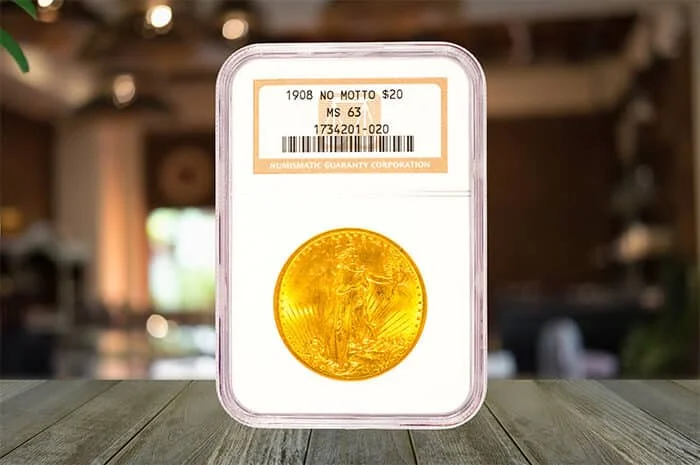
Professional grading through Professional Coin Grading Service (PCGS) or Numismatic Guaranty Company (NGC) provides third-party authentication and a standardized grade in a tamper-evident holder. For coins with meaningful numismatic value, PCGS or NGC certification supports both buyer confidence and stronger offers when you eventually sell.
5 Coin Categories Tyler Beginners Should Know
Pre-1965 U.S. Junk Silver Coins
The most accessible starting point for beginners. Dimes, quarters, and half dollars minted before 1965 contain 90% silver and trade close to their silver melt value. They are called “junk silver” because they are valued for metal content rather than collector appeal. A beginner can build a meaningful silver position by accumulating pre-1965 coins at modest prices. The identification check is simple: look at the coin edge. A solid silver edge (no copper stripe) indicates pre-1965 silver.
American Silver Eagles and Similar Bullion Coins
American Silver Eagles, minted by the U.S. Mint since 1986, each contain 1 troy ounce of .999 fine silver. They carry a small premium above the silver spot price, are widely recognized, and are one of the most liquid silver items in the market. For beginners who want straightforward silver bullion with broad buyer recognition, Silver Eagles are an excellent starting point.
Morgan and Peace Dollars
The most actively traded collectible silver coins in the United States. Morgan Dollars (1878-1921) and Peace Dollars (1921-1935) each contain 0.7734 troy ounces of silver. Most dates are common and trade slightly above melt. A small number of key dates have significant numismatic premiums. Learning which dates and mint marks are valuable in the Morgan and Peace series is one of the most practical skills a beginner collector can develop. Our blog on what Tyler coin dealers want sellers to know about Morgan and Peace dollars covers this topic directly.
American Gold Eagles and Pre-1933 U.S. Gold Coins
American Gold Eagles are investment-grade gold coins containing known quantities of pure gold in four sizes. They are the standard gold coin for investment and trade close to the gold content value. Pre-1933 U.S. gold coins (Liberty Head $5, $10, $20 pieces, and Saint-Gaudens Double Eagles) are no longer in production and carry both gold content value and numismatic premiums in many grades. For beginners interested in gold coinage, these two categories provide excellent starting points at different price ranges.
Certified Coins in PCGS or NGC Holders
Any coin already in a PCGS or NGC holder has been professionally authenticated and graded. These holders significantly reduce the authentication risk for buyers and support stronger values when selling. For beginners, buying certified coins reduces the risk of purchasing counterfeits or overgraded examples. When you encounter coins in certified holders at estate sales or in inherited collections, handle them carefully and do not attempt to remove them from the holder.
How to Grade Your Own Coins Before Getting Professional Help
Beginners should start with a simple three-tier assessment before deciding whether a coin warrants professional grading.
- Circulated vs uncirculated. Does the coin show wear on the high points of the design? Circulated coins have been used as currency and show varying degrees of wear. Uncirculated coins show no wear and retain full original surface.
- Significant vs minor wear. For circulated coins, is the wear heavy (design details mostly worn away) or light (details still sharp with only slight wear on high points)? This rough assessment places a coin in the broad Good to Very Fine range.
- Surface problems. Are there cleaning marks, scratches, or environmental damage? These reduce value and in some cases make professional grading less worthwhile.
Professional grading through PCGS or NGC is worthwhile when a coin is uncirculated or in Very Fine condition or better and is from a date and mint mark that carries significant numismatic value. For common junk silver coins and standard bullion, professional grading is not necessary.
Where Tyler Beginners Find Reliable Coin Information
- PCGS CoinFacts and NGC Coin Explorer provide free online price guides, population reports, and grading images for most U.S. coins.
- The U.S. Mint website covers the history and specifications of every American coin series.
- The Red Book (A Guide Book of United States Coins) is the standard annual price guide for U.S. coin collectors.
- Local resources like Tyler Gold & Bullion provide hands-on evaluation and answers to specific questions about coins you actually own. Our coin appraisals are always free.
Common Beginner Mistakes That Cost Tyler Coin Collectors Money
- Cleaning coins before appraisal. Cleaning is one of the most damaging actions in numismatics. It removes original surface patina that graders and collectors value, and it permanently reduces both grade and value. Never clean a coin before having it evaluated. Our blog on
- Removing coins from PCGS or NGC holders. The holder is part of the coin’s documented value. Removing a coin from a certified holder destroys the certification permanently.
- Overpaying for commemorative coins sold through infomercials or mail-order programs. Many modern commemorative and special edition coins are sold at high premiums with little secondary market demand. Their resale value is often much lower than the purchase price.
- Assuming age equals value. Most old coins are common. Age alone does not determine value. Date, mint mark, grade, and collector demand together determine whether a coin is worth significantly more than its metal content.
When to Bring Your Coins to a Professional in Tyler
Bring coins to Tyler Gold & Bullion when you want to know what your collection is actually worth at current market prices, when you have inherited coins and need professional identification and sorting, or when you are considering buying or selling coins and want an expert evaluation without obligation. Our collectible coins explains our evaluation approach for all coin categories. Our blog on coin shop vs gold buyer in Tyler helps you understand which type of buyer is best suited for your specific coin types.
For collectors thinking about eventually selling, our blog on maximizing your returns when selling rare and collectible coins covers what happens when you are ready to convert your collection to cash.
Why Tyler Coin Collectors Choose Tyler Gold & Bullion
| What We Offer | What It Means for You |
|---|---|
| Licensed by the Texas OCCC | State-certified precious metal buyer and dealer for all coin types |
| Texas Dept. of Agriculture certified scales | Accurate weight measurements for silver and gold content in all coin categories |
| Experienced buyers | Professional expertise covering both precious metal content and numismatic evaluation |
| Thermo-Fisher XRF technology | Non-destructive metal composition testing confirms silver and gold content on every coin |
| Free coin evaluations | No cost for appraisals, no obligation to buy or sell, no minimum quantity |
| Dual evaluation: metal + numismatic | Junk silver gets accurate melt pricing; key-date coins get both evaluations together |
| No need to pre-sort your collection | We identify, categorize, and evaluate everything you bring in from scratch |
| Rated 4.9 stars on Google | 4.9-star rating from Tyler residents for thorough, honest coin evaluations |
Frequently Asked Questions: Coin Collecting for Beginners in Tyler, TX
How do I start collecting coins as a beginner in Tyler, TX?
Start with a clear goal: are you interested in silver coins for their metal content, gold coins for investment, or historically significant collectibles? Pre-1965 junk silver coins are the most accessible starting point because they are easy to identify, widely available, and provide genuine silver value at modest prices. Visit Tyler Gold & Bullion for a free evaluation of any coins you already have before purchasing anything new.
What is the difference between a coin’s melt value and its numismatic value?
Melt value is the value of the precious metal content, calculated as weight times purity times current spot price. Numismatic value is the additional premium collectors pay above melt for rarity, historical significance, mint mark, and condition. Most coins have primarily melt value. A small number of specific key-date coins have numismatic value far above their metal content.
What is coin grading and why does it matter for beginner collectors?
Coin grading is the standardized assessment of a coin’s condition on the Sheldon scale from Poor (P-1) to Mint State 70 (MS-70). Grade matters because the same coin in different conditions can be worth dramatically different amounts. A Morgan Dollar in Fine condition may be worth $30. The same date in MS-65 might be worth $500 or more. Professional grading by PCGS or NGC provides the most reliable and universally recognized condition assessment.
Which coins are the best starting point for beginner collectors in Tyler?
Pre-1965 U.S. junk silver coins (dimes, quarters, half dollars) are the most accessible starting point. They contain real silver, are easy to identify by checking the edge for no copper stripe, and trade close to their silver melt value. American Silver Eagles are another excellent starting point for straightforward silver bullion. Both provide genuine precious metal value without requiring deep numismatic knowledge.
Should beginner collectors focus on gold coins or silver coins?
For most beginners, silver coins are a better starting point because their lower individual cost allows gradual learning. Pre-1965 junk silver, Morgan Dollars, and American Silver Eagles all provide educational entry points at different price levels. Gold coins, while excellent investments, represent a larger per-unit commitment that makes most sense once a collector has foundational knowledge.
How do I know if a coin is authentic and not a counterfeit?
Reputable sources, certified holders, and professional testing equipment provide the strongest protection against counterfeits. Buy from licensed dealers. Favor PCGS or NGC certified coins when purchasing collectibles. For bullion coins, Thermo-Fisher XRF testing at Tyler Gold & Bullion confirms metal composition non-destructively. Be cautious of coins priced significantly below market value.
What is PCGS and NGC certification and should beginners care about it?
PCGS and NGC are the two most trusted independent coin grading services. They authenticate coins and assign standardized grades in tamper-evident holders. For collectible coins with significant numismatic value, certification reduces buyer risk and supports stronger selling prices. For common junk silver and standard bullion, certification is not necessary and the cost is not recovered in the transaction.
How do I handle and store coins without damaging them?
Hold coins by their edges, never touching the face or reverse. Store in acid-free coin flips, plastic capsules, or coin albums designed for numismatic storage. Keep collections in dry, stable temperature environments away from direct sunlight and humidity. Do not store coins in PVC-based plastic sleeves, which can cause chemical reactions that permanently damage surfaces over time.
Is it a mistake to clean coins before having them appraised in Tyler?
Yes. Cleaning coins before appraisal is one of the most damaging things a collector can do. It permanently removes original surface patina that graders and collectors value as evidence of a coin’s unaltered history. Cleaned coins receive lower grades and can lose significant numismatic value. Bring all coins in their current condition. Tarnish and surface wear are expected and do not disqualify a coin from appraisal.
What is junk silver and is it a good starting point for beginner collectors in Tyler?
Junk silver refers to pre-1965 U.S. dimes, quarters, and half dollars valued primarily for their 90% silver content rather than for collector appeal. The name is a trade term, not a comment on quality. Junk silver is an excellent starting point for beginners because it is easy to identify, widely available, and provides genuine silver value at accessible prices. Many Tyler residents have junk silver sitting in old coin jars without realizing its current market value.
How do beginner collectors find reputable coin dealers in Tyler, TX?
Look for OCCC-licensed precious metal buyers who evaluate coins for both metal content and numismatic value. Tyler Gold & Bullion is OCCC-licensed and provides free coin evaluations with no obligation to buy or sell. A reputable dealer explains their pricing methodology, uses professional testing equipment, and welcomes questions. Our blog on coin shop vs gold buyer in Tyler compares the two buyer types.
When should a beginner collector consider selling their coins in Tyler?
Consider selling when you have a clear financial purpose, when you have identified pieces in your collection that exceed your original collecting goals, or when market prices are at historically favorable levels for your specific coins. A free evaluation at Tyler Gold & Bullion gives you accurate current values before any decision. There is no minimum collection size required for a free appraisal.
Can Tyler Gold & Bullion help me value an inherited coin collection?
Yes. Tyler Gold & Bullion evaluates inherited coin collections of any size and composition at no charge. We identify, sort, and evaluate every piece, explaining what each category contains and what it is worth. Bring the collection in whatever state it is currently in. No sorting or cleaning is necessary before your visit. Our full guide on what to expect during a coin appraisal in Tyler covers this process step by step.
What are error coins and are they worth collecting?
Error coins are pieces that were produced with minting mistakes, such as double strikes, off-center strikes, die errors, and planchet defects. Some errors are highly sought by collectors and command significant premiums. Most minor errors are interesting but not dramatically valuable. Identifying whether a specific error qualifies as collectible requires expertise. Bring any coins with unusual characteristics to Tyler Gold & Bullion for a free evaluation.
How do I research the value of a specific coin before buying or selling in Tyler?
PCGS CoinFacts and NGC Coin Explorer provide free population reports, price guides, and grading images for U.S. coins. Cross-reference multiple sources because prices vary by grade and demand changes over time. For coins you already own, a free in-person evaluation at Tyler Gold & Bullion provides the most accurate current market value for your specific pieces based on their actual condition.
Start Your Coin Collecting Journey With a Free Evaluation in Tyler
The best first step for any Tyler coin collector, whether starting from scratch or evaluating an inherited collection, is a free in-person evaluation at Tyler Gold & Bullion. Our experienced buyers identify what you have, explain what it is worth, and answer questions about the market, grading, and collecting strategy without any obligation to buy or sell.
Visit Tyler Gold & Bullion at 2301 S Broadway Ave A6 in Tyler, TX. Our OCCC-licensed team handles all coin categories from junk silver to certified key-dates to gold coinage. See our full collectible coins and the complete list of items we evaluate and purchase. Call 903-522-4149 with questions or stop by Monday through Friday from 10am to 4pm.