 2301 S Broadway Ave A6 Tyler, TX 75701



Where to Sell Scrap Gold in Tyler, TX: Dental Gold, Broken Chains, and Single Earrings
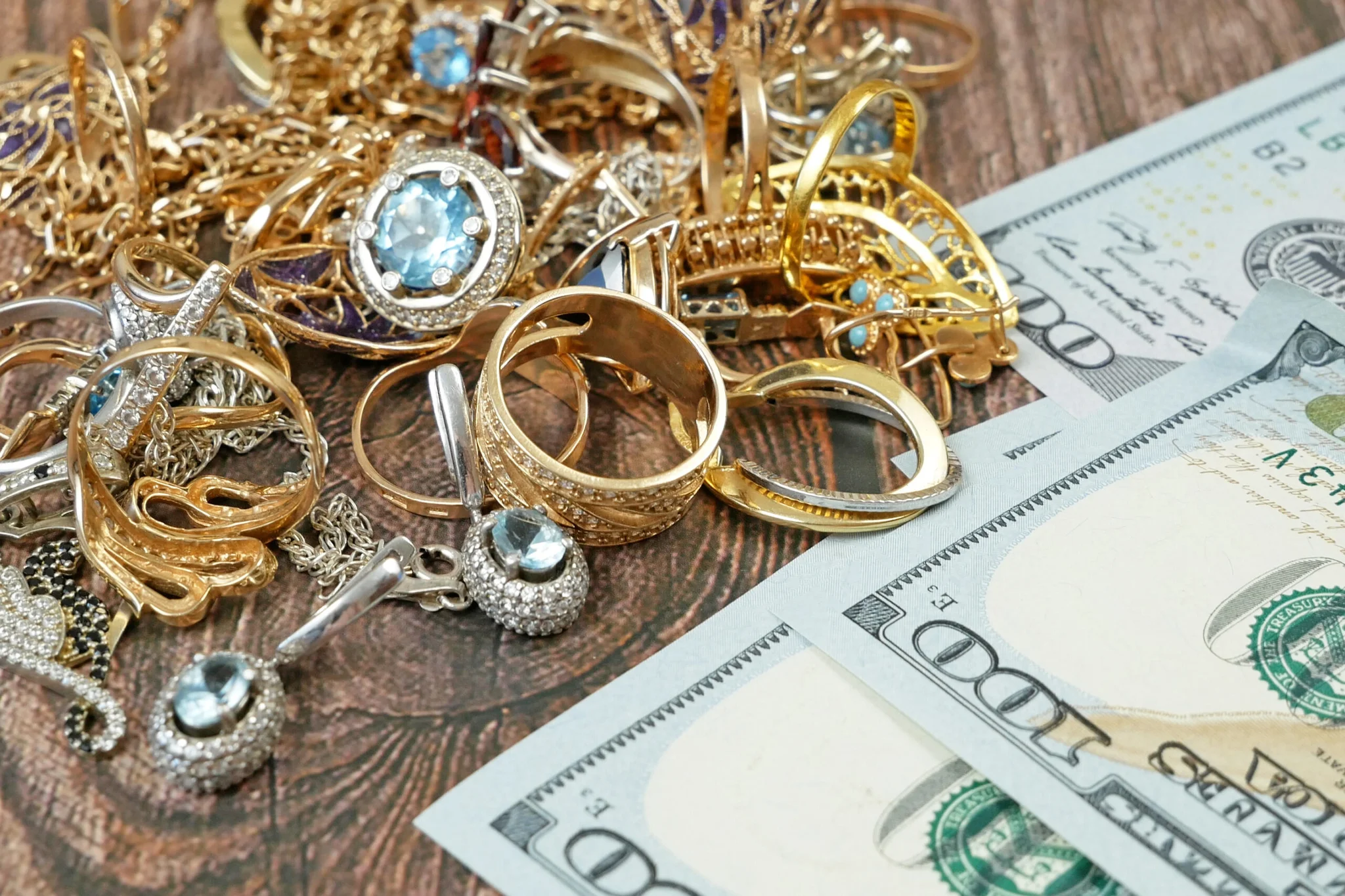
That drawer of mismatched gold items you have been meaning to deal with has real cash value, and condition does not matter. A broken chain has the same gold content as an intact one of equal weight and karat. A single earring from a lost pair contains exactly the same gold as one earring from a matched set. Dental crowns and bridges removed during procedures typically contain gold worth meaningful cash. In Tyler, scrap gold is valued purely on its gold content, not on its condition, appearance, or completeness.
At Tyler Gold & Bullion, we are licensed by the Texas Office of Consumer Credit Commissioner (OCCC) as a certified precious metal buyer. Our scales are certified by the Texas Department of Agriculture, and our experienced buyers use Thermo-Fisher XRF technology to test every scrap item accurately without damaging it. Tyler residents rate us 4.9 stars on Google. Scrap gold evaluations at our Tyler location are always free with no obligation to sell.
What Actually Counts as Scrap Gold in Tyler’s Market
Scrap gold includes any gold item valued primarily for its metal content rather than its design, brand, or condition. This covers a wider range of items than most Tyler residents realize.
Broken Gold Jewelry
Chains with broken clasps, bent rings, bracelets missing links, and earrings with broken posts all qualify as scrap gold. Damage has no effect on gold content. A 14K gold chain weighing five grams contains the same amount of gold whether it is broken or pristine. Our blog on why condition does not affect your gold payout explains this specifically for damaged and broken pieces.
Single Earrings From Lost Pairs
Many Tyler residents keep single earrings for years assuming they have no practical value. A single earring contains the same gold as one earring from any matched pair of equal weight and karat. It is fully evaluable and fully purchasable as scrap. Our guide for single item gold sellers in Tyler covers this scenario in detail.
Dental Gold
Gold dental crowns, bridges, and fillings removed during dental work are among the most commonly overlooked scrap gold items in Tyler. Dentists typically give these items to patients after procedures. Dental gold generally runs from 10K to 20K purity depending on the specific alloy used by the dental lab. Even a single crown can contain meaningful gold content. Multiple crowns or a bridge represent more significant gold weight.
Class Rings and Old Accessories
High school and college rings from the 1960s through 1990s were frequently made in 10K or 14K solid gold. If you no longer wear the ring and the stone has little independent value, it qualifies as scrap gold based on the metal content of the band. Gold tie tacks, lapel pins, cufflinks, and watch bands with gold content also qualify. Small items can be combined in a single evaluation for a complete total.
Outdated and Unfashionable Pieces
A thick herringbone chain from the 1990s or a wide gold bracelet that no longer matches current style contains the same gold content it always did. If you would not wear the piece, converting it to cash at current gold prices is a straightforward financial decision. Our gold jewelry covers all the types of gold items we evaluate.
Gold-Filled vs Gold-Plated Items
Gold-filled jewelry has a thick layer of gold mechanically bonded to a base metal core and contains some gold value. Gold-plated items have a microscopic surface layer of gold and contain essentially no recoverable gold. Professional XRF testing distinguishes between these instantly and non-destructively. Bring questionable items for free testing to know exactly what you have before making any assumptions.
Why Tyler’s Scrap Gold Market Produces Real Cash Value
Gold trades at historically strong prices per troy ounce according to daily tracking through the World Gold Council. These prices make even small amounts of scrap gold worth selling. Karat determines the purity factor applied to the total weight. 24K is 99.9% pure gold. 18K is 75% gold. 14K is 58.3% gold. 10K is 41.7% gold. The rest of each karat is alloy metals.
Buyers pay a percentage of the refined gold value after applying the spot price to the confirmed gold content. Fair specialized buyers in Tyler typically pay 70 to 85 percent of refined gold value. This margin covers refining costs, which run 2 to 5 percent of gold content, and operating expenses. A buyer offering significantly more than 85 percent of spot is either pricing incorrectly or applying the percentage to a different base calculation than the standard one.
The practical implication: that drawer of broken chains, single earrings, and dental crowns may contain more cash value than you realize. A free evaluation at Tyler Gold & Bullion tells you exactly what it is worth before you decide anything.
How Tyler Gold & Bullion Tests and Values Scrap Gold
XRF Metal Composition Testing
The Thermo-Fisher XRF analyzer used at Tyler Gold & Bullion reads the precise metal composition of your scrap item non-destructively. It confirms the gold percentage (purity) accurately without scratching, cutting, or damaging the item. For items with karat stamps, XRF confirms that the stamp matches the actual metal content. For items without stamps, it identifies the actual purity. This technology catches plated or mis-stamped items and confirms genuine gold content accurately.
Certified Scale Weighing
After XRF testing confirms purity, the item is weighed on our Texas Department of Agriculture certified scale. Weight is recorded in grams. For items with gemstones, the stone weight is noted separately. The gold content calculation applies only to the actual gold weight. You see the scale reading throughout.
The Offer Calculation
The calculation is: gold weight in grams times the karat purity factor times the current gold spot price per gram times the buyer margin percentage. You see all four elements applied in front of you before any decision is made. No step occurs out of your sight. No unexplained deductions are applied. Our blog on how gold price today translates to your actual payout explains this calculation in full with examples.
Your Options for Selling Scrap Gold in Tyler
Specialized Precious Metal Buyers (Best Option for Most Sellers)
Businesses focused on gold and silver as their core activity evaluate scrap gold efficiently and pay competitive percentages of refined value. They invest in XRF testing equipment and certified scales. Tyler Gold & Bullion evaluates dental gold, broken jewelry, single earrings, class rings, and all other scrap in a single free appointment with same-day payment. This is the right starting point for most Tyler scrap gold sellers.
Pawn Shops
Pawn shops buy scrap gold but typically offer lower percentages of gold value because they operate across many product categories and carry wider margins. If you need cash immediately and a specialized buyer is unavailable at that moment, a pawn shop can serve that need. For most scrap gold evaluations with flexibility on timing, a specialized buyer provides better results. Our comparison of local buyers versus pawn shops in Tyler covers these differences.
Mail-In Services
Mail-in gold buying programs require shipping scrap gold to a facility you cannot visit. You receive an offer after the item is received and tested. If you decline, the item is returned. The process introduces shipping risk and delays. For most Tyler residents with scrap gold, local evaluation at Tyler Gold & Bullion produces an equivalent or better offer with same-day payment and no shipping risk.
How to Prepare Your Scrap Gold for Sale in Tyler
- Gather everything at once. Check jewelry boxes, dresser drawers, bathroom cabinets, and any other locations where you have stored gold items. Combining all scrap in one visit is more efficient than multiple trips.
- Do not sort by karat before visiting. The buyer tests each item anyway. Attempting to sort without professional tools may result in misidentification that actually complicates the evaluation.
- Do not clean the items. For scrap gold sold for metal content, condition and appearance are irrelevant. Do not use chemicals or abrasive cleaners. A dry cloth to remove dust is sufficient.
- Bring a government-issued photo ID. Texas law requires identity verification for all precious metal transactions. This is a legal requirement regardless of the amount or type of gold being sold.
- Call ahead for large quantities. For estate collections or large quantities of dental gold, calling 903-522-4149 in advance lets us allocate appropriate time for the evaluation.
Our full precious metals preparation guide covers preparation for all item types including coins, watches, and flatware alongside scrap gold.
Common Mistakes That Cost Tyler Scrap Gold Sellers Money
- Accepting the first offer without getting a second evaluation. Offers can vary meaningfully between a pawn shop and a specialized buyer. Getting two evaluations costs nothing and reveals whether the first offer was competitive.
- Keeping items separated and making multiple trips. Combining everything in one visit saves time and often produces a better combined result.
- Assuming gold-plated items are worth selling for gold. Gold plating contains essentially no recoverable gold. Professional XRF testing identifies this at no cost.
- Not asking for the calculation breakdown. You are entitled to see exactly how the offer was reached. If a buyer presents a number without showing karat, weight, and spot price, ask specifically before deciding.
Why Tyler Residents Bring Scrap Gold to Tyler Gold & Bullion
| What We Offer | What It Means for You |
|---|---|
| Licensed by the Texas OCCC | State-certified buyer for all scrap gold types: dental, broken, estate, and single pieces |
| Texas Dept. of Agriculture certified scales | Every gram of scrap gold weighed accurately on state-verified equipment |
| Thermo-Fisher XRF technology | Non-destructive purity testing on every scrap item, no scratching or damage |
| Experienced buyers | Professional expertise to identify and value all scrap gold types accurately |
| All scrap types in one appointment | Dental gold, broken chains, class rings, single earrings, and estate pieces evaluated together |
| Same-day payment | Cash, check, or bank transfer immediately after accepting the offer |
| Free evaluations, no minimum | One item or a full box of scrap evaluated free with no obligation to sell |
| Rated 4.9 stars on Google | 4.9-star rating from Tyler residents for fair, accurate scrap gold evaluations |
Frequently Asked Questions About Selling Scrap Gold in Tyler, TX
How much is dental gold worth in Tyler, TX?
Dental gold value depends on the weight and purity of each piece. Dental gold typically ranges from 10K to 20K purity depending on the alloy used by the dental lab. A professional XRF evaluation at Tyler Gold & Bullion confirms the exact purity, and certified scales record the precise weight. The offer is calculated from those two confirmed values at current gold spot prices. A free evaluation tells you exactly what your specific dental gold is worth.
Will Tyler gold buyers take broken chains and clasps?
Yes. Broken gold chains have the same gold content as intact ones and are purchased at identical rates per gram for the same karat. A broken clasp does not affect the gold content of the chain. Bring broken chains, kinked chains, and tangled pieces exactly as they are. Condition does not affect scrap gold pricing.
Is a single gold earring worth selling in Tyler?
Yes. A single earring contains the same gold content as one earring from any matched pair of equal weight and karat. Many Tyler residents keep single earrings for years assuming they have no value. They do. Bring single earrings for a free evaluation regardless of their size or weight.
Do I need to remove stones from gold jewelry before selling as scrap?
No. Leave stones in place. Professional buyers evaluate the complete piece and note stone weight separately from the gold content. Most stones in standard jewelry have limited independent value. You do not receive more money by removing them before your visit, and removal risks damaging either the stone or the setting.
Can I sell gold-filled and gold-plated items in Tyler?
Gold-filled items have a thick layer of gold bonded to a base metal and contain some gold value. Gold-plated items have a microscopic coating and contain essentially no recoverable gold. Tyler Gold & Bullion uses Thermo-Fisher XRF technology to instantly identify whether an item is solid gold, gold-filled, or gold-plated at no charge. Bring questionable items for free testing before making any assumptions.
What is the difference between scrap gold and gold jewelry for valuation purposes?
Scrap gold is any gold item valued for its metal content regardless of design or condition. Standard gold jewelry sold for metal content follows the same calculation: karat purity factor times weight times current spot price. The distinction is primarily about whether a piece might carry additional value as a collectible or designer item above its melt value. A experienced buyer identifies when an item may be worth more intact than as scrap.
How quickly can I sell scrap gold at Tyler Gold & Bullion in Tyler?
Most scrap gold evaluations take 20 to 30 minutes for a typical collection. Single items take 10 to 15 minutes. Same-day payment is provided immediately after you accept the offer. Walk-ins are welcome Monday through Friday from 10am to 4pm at 2301 S Broadway Ave A6 in Tyler, TX.
Should I sort my scrap gold by karat before bringing it in?
No sorting is necessary. Tyler Gold & Bullion tests each item individually to confirm karat and weight. Bringing everything unsorted in its current state is perfectly acceptable. The buyer sorts, tests, and organizes the evaluation systematically during your appointment.
Is there a minimum amount of scrap gold worth bringing to a buyer in Tyler?
No minimum quantity or minimum weight is required for a free evaluation at Tyler Gold & Bullion. Even a single small piece of genuine gold is worth evaluating. Many Tyler residents are surprised at the cash value contained in a small collection of seemingly minor scrap pieces when evaluated together.
How does Tyler Gold & Bullion test scrap gold items?
Testing follows three steps. First, visual inspection identifies karat stamps where visible. Second, Thermo-Fisher XRF technology confirms metal composition non-destructively by reading the actual metal percentages present. Third, Texas Department of Agriculture certified scales record the exact weight. The offer calculation applies the confirmed purity factor to the confirmed weight at the current gold spot price. Every step happens on the counter in front of you.
Is it safe to sell dental gold that came from a medical procedure?
Yes. Dental gold removed during dental work is personal property and is fully purchasable by precious metal buyers. There are no legal restrictions on selling your own dental gold. Texas law requires identity verification (government-issued photo ID) for all precious metal transactions, which protects all parties.
What is a class ring worth as scrap gold in Tyler, TX?
Class ring value depends on the ring’s karat and weight. Many high school and college rings from the 1960s through 1990s were made in 10K or 14K solid gold. A free evaluation at Tyler Gold & Bullion confirms whether your specific ring is solid gold or a different material, and tells you exactly what the gold content is worth at current market prices.
Does Tyler Gold & Bullion buy gold items mixed with other metals?
Yes. Gold alloys that contain copper, silver, zinc, or other metals alongside gold are standard for jewelry and are evaluated the same way as any karat gold. XRF testing reads the exact percentage of gold present and the offer calculation applies the confirmed purity factor. All standard gold karat alloys (10K, 14K, 18K) are purchased.
What happens to my scrap gold after I sell it in Tyler?
After purchase, scrap gold is processed by a licensed precious metal refinery. The gold is melted, refined to remove alloy metals, and recovered as pure gold for reuse in new products or bullion. This refining process is why buyers apply a margin that reflects the refining cost alongside their operating expenses.
Can I sell multiple types of scrap gold in the same visit at Tyler Gold & Bullion?
Yes. Dental gold, broken jewelry, single earrings, class rings, and all other scrap gold types can be brought together in a single free appointment. Each category is evaluated separately with XRF testing and certified weighing, and you receive a clear breakdown by item or group before making any decision.
Turn Your Scrap Gold Into Cash at Tyler Gold & Bullion Today
That box of broken chains, single earrings, old class rings, and dental gold represents real cash value at current gold prices. Most Tyler residents who bring in a mixed collection of scrap gold are surprised by the total. Condition does not disqualify any genuine gold item. There is no minimum. The evaluation is always free.
Visit Tyler Gold & Bullion at 2301 S Broadway Ave A6 in Tyler, TX. Our OCCC-licensed, experienced team evaluates all types of gold items including scrap, dental gold, broken jewelry, and estate pieces. Call 903-522-4149 to discuss what you have before coming in, or stop by Monday through Friday from 10am to 4pm.